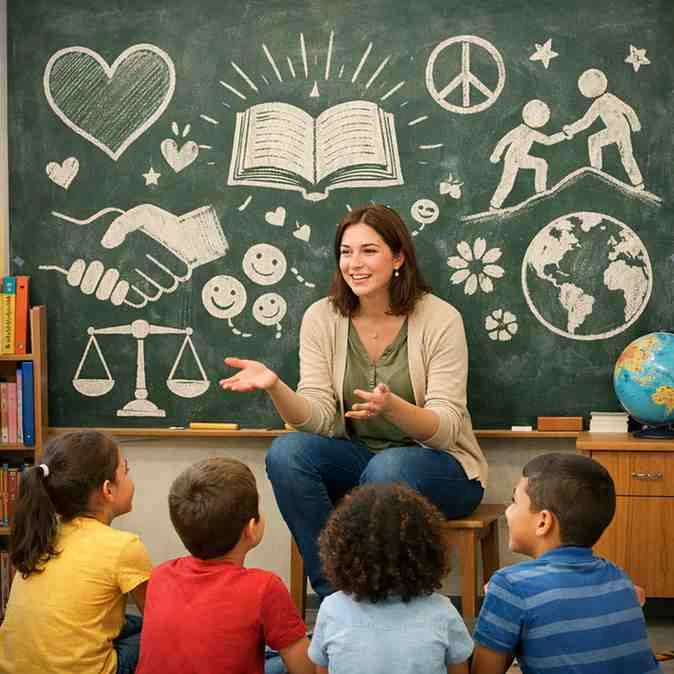
Jakarta, incaschool.sch.id – Strong Moral Education helps school students develop integrity, empathy, and good judgment that guide their behavior both inside and outside the classroom. Schools do more than teach academic content. They also shape how students understand responsibility, fairness, honesty, and their impact on others. Moral education supports this broader role by helping students reflect on values and make better choices in everyday situations.
When students develop moral understanding, they are more likely to show respect, act responsibly, and consider the consequences of their actions. This contributes not only to personal growth, but also to a healthier and more supportive school environment.
Why moral education matters

Moral Education matters because students regularly face choices that involve honesty, respect, responsibility, and treatment of others. Without guidance, those choices may be shaped only by impulse, pressure, or habit.
Moral education can help students:
- Understand right and wrong more clearly
- Build stronger personal responsibility
- Improve empathy toward others
- Make thoughtful decisions
- Contribute positively to school life
These qualities support both character development and social well-being.
Teaching integrity in school
A key part of Moral Education is helping students build integrity. Integrity involves honesty, consistency, and a willingness to do what is right even when no one is watching or when doing so is not especially convenient.
Schools can support integrity by encouraging students to:
- Tell the truth
- Take responsibility for mistakes
- Respect rules and fairness
- Avoid cheating or dishonesty
- Follow through on commitments
Integrity is one of those traits that becomes most visible precisely when it would be easier to ignore it.
Building empathy and respect
Another major goal of Moral Education is the development of empathy. Students who learn to consider the feelings and experiences of others are often better able to form healthy relationships and avoid harmful behavior.
Empathy can be strengthened through:
- Classroom discussion
- Literature and storytelling
- Reflection on social situations
- Encouraging perspective-taking
- Modeling respectful communication
This helps students move beyond self-interest and respond more thoughtfully to others.
Supporting good judgment and decision-making
Moral Education also helps students practice judgment. Good judgment is not only about knowing values in theory. It is about applying them when situations are unclear, emotional, or socially difficult.
Students can benefit from learning how to:
- Think before acting
- Consider consequences
- Weigh fairness and responsibility
- Resist negative peer pressure
- Reflect on the impact of their choices
These habits help moral understanding become practical rather than abstract.
Moral education as part of school culture
The strongest Moral Education usually happens when values are reinforced through daily school culture rather than taught only in occasional lessons. Students learn more effectively when they see adults model the same principles the school promotes.
A supportive culture may include:
- Clear expectations for behavior
- Respectful teacher-student relationships
- Fair responses to misconduct
- Opportunities for reflection and accountability
- Consistent reinforcement of shared values
When school culture supports moral learning, values become part of lived experience.
Final thoughts
Moral Education helps school students build integrity, empathy, and good judgment by connecting values to daily behavior and decision-making. Through clear guidance, reflection, and consistent modeling, schools can support students in becoming more responsible and thoughtful individuals.
Students remember more than lessons from a textbook. They also carry forward the values they learn through experience, example, and daily practice.
Explore our “”Knowledge“” category for more insightful content!
Don't forget to check out our previous article: Arts Education: Fostering Creativity and Expression In School