Jakarta, incaschool.sch.id – Strong Arts Education plays an important role in fostering creativity, self-expression, and broader student development in school. Education is not only about mastering academic subjects. It is also about helping students explore ideas, communicate feelings, and engage with culture in meaningful ways. Through visual art, music, drama, dance, and related activities, arts education gives students opportunities to create, imagine, and express themselves beyond conventional classroom routines.
For many students, the arts provide a valuable space for confidence, exploration, and emotional growth. They encourage originality while also developing discipline, observation, and communication. In this way, arts education supports both creative development and a richer overall learning experience.
Why arts education matters
Arts Education matters because it helps students develop skills and perspectives that are often difficult to build through academic instruction alone. The arts support creativity, interpretation, and communication in ways that enrich the school experience.
Arts learning can help students:
- Express ideas and emotions
- Build creative confidence
- Strengthen observation and focus
- Appreciate culture and diversity
- Develop persistence through practice
These benefits make the arts an important part of balanced education.
Forms of arts education in school
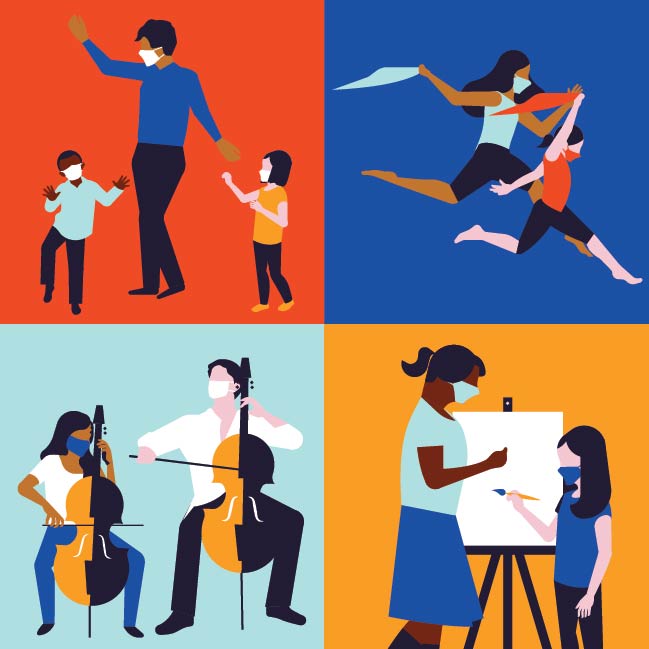
A broad Arts Education approach can include different disciplines, giving students multiple ways to engage creatively.
Common forms include:
- Visual arts
- Music
- Drama and theater
- Dance
- Creative design activities
Each area offers different opportunities for expression, skill-building, and participation.
Creativity and student expression
One of the greatest strengths of Arts Education is its ability to create space for student voice and imagination. Students are often able to communicate thoughts or feelings through artistic work in ways that differ from standard written or spoken assignments.
This supports:
- Personal expression
- Original thinking
- Emotional communication
- Exploration of identity
- Creative risk-taking
That freedom can be especially valuable for students who do not always feel fully represented by traditional academic formats.
Broader learning benefits of the arts
Good Arts Education also contributes to wider educational growth. Artistic practice often requires concentration, revision, patience, and attention to detail, all of which support learning habits in other areas.
The arts can help develop:
- Discipline and focus
- Problem-solving
- Collaboration in group projects
- Confidence in presenting work
- Respect for different perspectives
Creativity may look free-flowing from the outside, but it often involves a surprising amount of thoughtful effort behind the scenes.
Building a more engaging school environment
Schools that value Arts Education often create more dynamic learning environments where students can participate in a wider range of experiences. Exhibitions, performances, and creative projects can strengthen school culture and student engagement.
This may lead to:
- More inclusive participation
- Stronger student confidence
- Richer school events and activities
- Greater appreciation for creative talent
- A more expressive school community
The arts help schools feel more alive, more human, and considerably less like a building designed entirely around worksheets.
Final thoughts
Arts Education fosters creativity and expression in school by giving students meaningful opportunities to explore ideas, communicate emotions, and develop artistic confidence. As part of a balanced education, the arts support not only creativity but also personal growth and deeper engagement with learning.
Students need room not only to learn facts, but also to create meaning. Arts education helps provide exactly that space.
Explore our “”Knowledge“” category for more insightful content!
Don't forget to check out our previous article: Character Education: Teaching Values, Responsibility, and Positive Student Behavior