
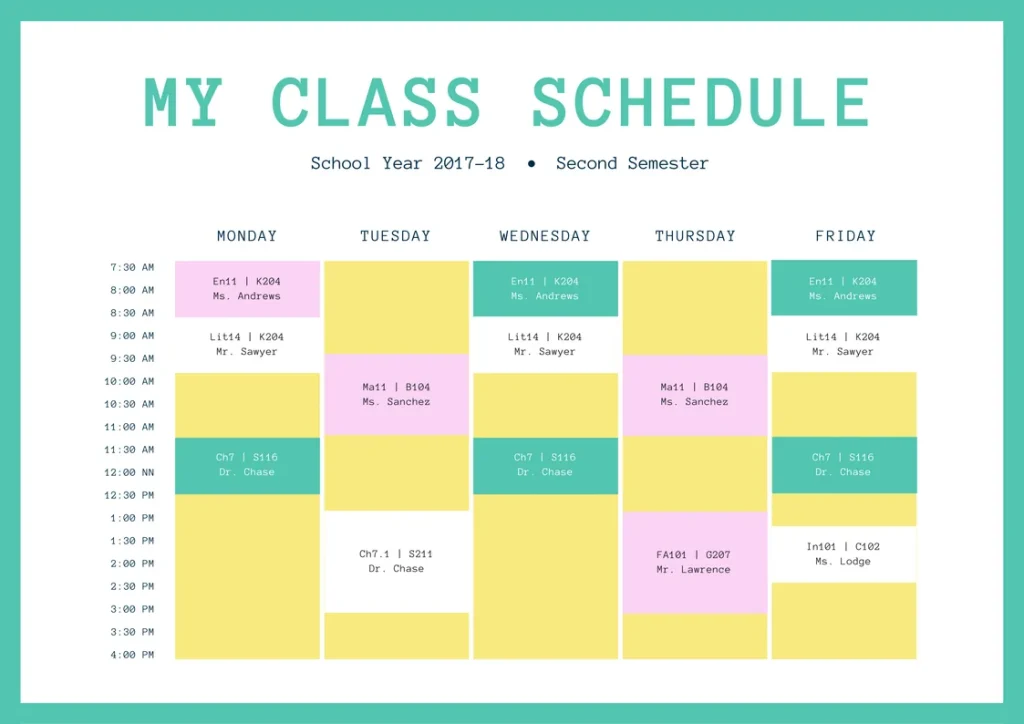
Jakarta, incaschool.sch.id – A well-designed Class Schedules system plays a major role in shaping the daily learning experience of high school students. More than just a list of lesson times, a class schedule affects concentration, subject balance, energy levels, and how students move through the school day. When schedules are organized thoughtfully, they can help students make better use of time, stay focused, and engage more effectively with different subjects.
For schools, class scheduling is an important part of educational planning. For students, it becomes the framework that structures learning opportunities every day. A schedule that balances academic demands, breaks, practical activities, and subject variety can support stronger learning habits and a more manageable school routine.
Why class schedules matter in high school
Class Schedules matter because they directly influence how students experience teaching and learning throughout the day. Poorly arranged schedules can lead to fatigue, low focus, rushed transitions, or unbalanced workloads. On the other hand, thoughtful scheduling can improve attention, create smoother routines, and help students approach each class with better readiness.
Schedules also affect teacher coordination, room use, and access to special subjects such as labs, arts, or physical education. In this way, class scheduling supports the broader functioning of the school as well as the individual student experience.
How schedules shape learning opportunities
A strong Class Schedules structure helps maximize learning by making time more effective. Students benefit when demanding subjects are placed at times that support concentration, when there is balance between different types of learning, and when enough time exists for breaks and transitions.
A good schedule can help by:
- Reducing mental overload from too many heavy subjects in a row
- Creating space for practical or creative lessons
- Supporting better focus through balanced timing
- Allowing students to prepare mentally for different subjects
- Improving consistency in daily routines
These factors may seem ordinary, but they shape how well students can actually use the time they spend in school.
Balancing academic and practical subjects
One important part of effective Class Schedules is subject balance. High school students often study a mix of core academic subjects and practical, creative, or physical classes. A schedule that includes variety helps maintain engagement and reduces fatigue.
Balanced scheduling may include:
- Mixing intensive academic lessons with lighter or interactive sessions
- Avoiding too many test-heavy subjects in one day
- Including physical education or arts as part of the overall rhythm
- Giving enough time for lab work, projects, or discussion-based classes
This balance matters because students are more likely to learn well when the day has structure without becoming mentally exhausting.
Helping students manage time and preparation
Well-organized Class Schedules also support student time management. When students understand the pattern of their week, they can prepare materials, plan homework, and adjust their energy more effectively. Predictable schedules make school life more manageable and reduce confusion.
Students can benefit by:
- Checking the next day’s subjects in advance
- Organizing books and materials ahead of time
- Preparing for assessments based on weekly patterns
- Using free periods or lighter days wisely
These habits help students turn schedules into tools for preparation rather than just something they react to every morning with varying levels of enthusiasm.
The role of schools in schedule quality
Schools have an important responsibility in making Class Schedules effective. Good scheduling requires attention to student needs, teacher workloads, subject demands, and learning flow across the week. It is not simply a technical exercise of filling time slots.
Schools improve scheduling quality when they consider:
- Student concentration patterns
- Fair subject distribution across the week
- Reasonable break times
- Access to special facilities
- Consistency without unnecessary rigidity
Thoughtful scheduling reflects thoughtful education. It shows that learning is being supported not only by content, but also by timing and structure.
Final thoughts
Class Schedules are an important part of maximizing learning opportunities in high school. When schedules are balanced, organized, and designed with student learning in mind, they support focus, better routines, and a more effective school day.
A good schedule may look simple on paper, but its impact is significant. It helps create the rhythm of school life, and when that rhythm works well, students have a better chance to learn with energy, clarity, and consistency.
Explore our “”Knowledge“” category for more insightful content!
Don't forget to check out our previous article: Social Studies: Helping Students Understand Society, History, and Civic Life