
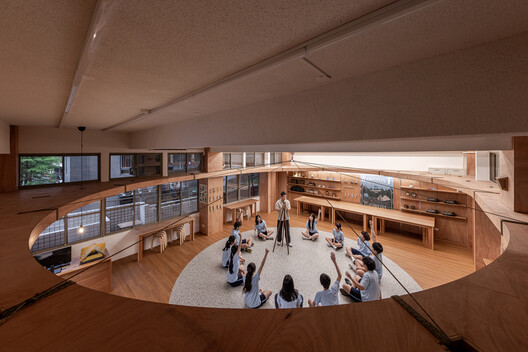
Jakarta, incaschool.sch.id – Junior high school is an important stage where students begin to move from simple memorization toward deeper analysis, problem-solving, collaboration, and independent thinking. At this level, learning becomes more effective when students can explore ideas through action rather than passive observation alone. That is why Junior High Projects are so valuable. To me, junior high projects are structured hands-on learning activities that help students apply knowledge, ask questions, test ideas, solve problems, and develop stronger critical thinking skills across different subjects.
Why Junior High Projects Matter
In my experience, Junior High Projects matter because students learn more deeply when they actively engage with concepts. Reading and listening are important, but projects give students the opportunity to experiment, create, investigate, discuss, and reflect. This kind of learning encourages them to move beyond repeating information and toward understanding how ideas work in practice.
This becomes especially important because junior high students are developing the ability to reason more independently. They are beginning to compare evidence, evaluate solutions, identify patterns, and explain their thinking. Well-designed projects support these skills by giving students meaningful tasks that require judgment, creativity, and persistence.
There is also a strong connection to academic Knowledge, student engagement, collaboration, and confidence-building here. Good junior high projects are not simply classroom activities to fill time. They are learning tools that strengthen thinking.
My Perspective on Hands-On Learning
What changed my understanding of Junior High Projects was realizing that projects can teach process as much as content. At first, some may think projects are mainly about making posters, models, or presentations. But over time, I came to see that the real value often lies in the thinking students do while planning, researching, testing, revising, and explaining their work.
That is what makes this topic meaningful to me. Junior high projects are not only about producing something visible. They are about helping students learn how to think.
Core Benefits of Junior High Projects
I think the value of Junior High Projects becomes easier to understand when their main benefits are broken down clearly.
Active learning
Students learn by doing, testing, discussing, and creating.
Critical thinking
Projects require students to analyze information and make decisions.
Problem-solving
Hands-on tasks often involve obstacles that students must work through.
Collaboration
Group projects help students practice teamwork and communication.
Creativity
Students can explore original ways to present or apply ideas.
Real-world connection
Projects help students see how subjects connect to everyday life.
Hands-On Learning Ideas for Junior High Projects
I have noticed that Junior High Projects become more effective when they are varied, practical, and connected to student curiosity.
Science investigation project
Students design a simple experiment, collect results, and explain what they learned.
History evidence project
Students analyze historical sources and build a reasoned interpretation of an event.
Math budgeting challenge
Students create a realistic budget for a school event or family scenario.
Literature response project
Students compare characters, themes, or conflicts using visual and written analysis.
Community problem-solving project
Students identify a local issue and propose a practical solution.
Engineering design activity
Students build a model or prototype that solves a given challenge.
Common Challenges in Junior High Projects
I have noticed that Junior High Projects also come with several challenges.
Uneven participation
Some students may contribute more than others in group work.
Limited resources
Materials, time, or technology may be restricted.
Focus on appearance over thinking
Projects can sometimes emphasize presentation more than reasoning.
Varying skill levels
Students may need different amounts of guidance.
Assessment difficulty
Teachers may find it challenging to measure both process and final product fairly.
Practical Value of Junior High Projects
I believe Junior High Projects offer lasting value because they help students build habits that support future academic success.
They strengthen reasoning
Students practice evaluating, organizing, and applying information.
They improve engagement
Hands-on work often increases motivation and interest.
They support communication skills
Students explain ideas through writing, speaking, and presentations.
They encourage persistence
Projects require revision, patience, and problem-solving.
They build confidence
Completing meaningful work helps students trust their abilities.
Below is a simple overview of how different junior high projects can strengthen critical thinking:
| Junior High Project Type | Critical Thinking Skill Supported | Example in Practice |
|---|---|---|
| Science investigation | Observation and evidence analysis | Students test how light affects plant growth |
| History evidence project | Interpretation and reasoning | Students compare primary sources from a historical event |
| Math budgeting challenge | Planning and decision-making | Students calculate costs for a mock school fundraiser |
| Literature response project | Analysis and explanation | Students examine how a character changes across a story |
| Community problem-solving project | Evaluation and solution design | Students propose ways to reduce waste at school |
These examples show that junior high projects are not simply creative assignments. They are practical ways to strengthen critical thinking through active learning.
Why Junior High Projects Matter Beyond the Classroom
I think Junior High Projects matter because they teach students how to approach questions, challenges, and decisions in thoughtful ways. The ability to investigate, evaluate information, collaborate with others, and explain reasoning is useful not only in school but also in everyday life. Projects help students build these habits in ways that feel meaningful and memorable.
That broader significance is what makes this topic so valuable. Junior high projects are not only about school performance. They are about preparing students to think more clearly, confidently, and independently.
Final Thoughts
For me, Junior High Projects are one of the most effective ways to support student development because they combine knowledge, creativity, analysis, and action. They help students move beyond passive learning and into deeper understanding through experience.
That is why they matter so much. Junior high projects are not simply classroom tasks. They are powerful tools for hands-on learning ideas that strengthen critical thinking
Explore our “”Knowledge“” category for more insightful content!
Don't forget to check out our previous article: School Library Resources: Maximizing Books, Media, and Research Support